How to Participate in a Council Decision at the Right Stage
Learn how to participate in a council decision by matching your contribution to the stage, channel and instructions, so your concern reaches the right place.
To participate in a council decision, match your contribution to the point when the council is gathering views, hearing speakers or weighing its options. A useful comment at the wrong stage can miss the people and process it was meant to reach.
Find the decision stage before choosing your contribution
Start with the question the council is trying to answer. A proposal may still be open to public input, be scheduled for a formal speaking session, or be on an agenda for councillors to discuss. Those stages call for different kinds of participation.
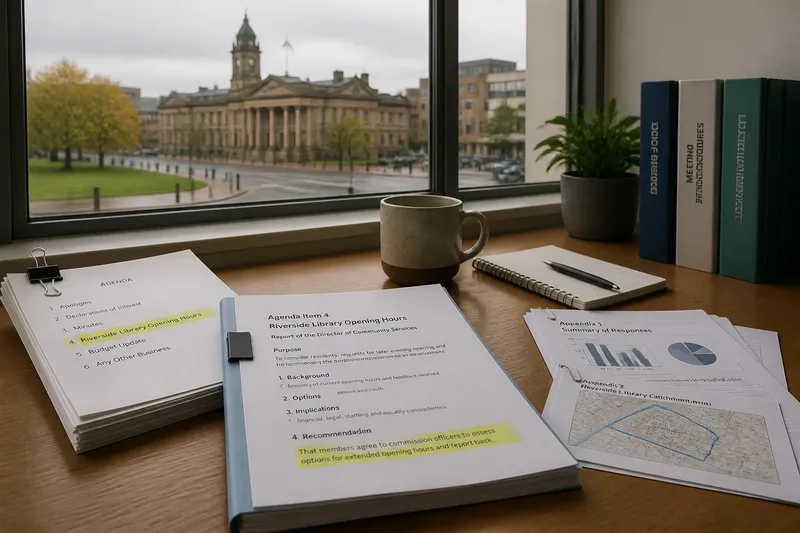
Look for the proposal or agenda item, the deadline, and the requested response. The invitation may ask for written views, require registration to speak, or explain that the public can attend and observe. Treat these as practical instructions, rather than assuming every public event offers the same chance to influence discussion.
Think of the process like sending a parcel: the right contents still need the right address. A concise, relevant point is most useful when sent through the channel the council has designated.
Choose a channel that fits the kind of input requested
Written feedback suits a question that invites considered views on a draft, service change or set of options. Address the question directly, explain the local effect you are concerned about, and use the form or email route in the notice. If the invitation asks for a specific format, follow it.
A speaking session may be more structured. Check whether you need to register, when speakers are called, and whether comments must stay within a named agenda item. Prepare one main point and a short reason for it. Plain language is enough; a clear example of a local effect is often easier to follow than a broad declaration of support or opposition.
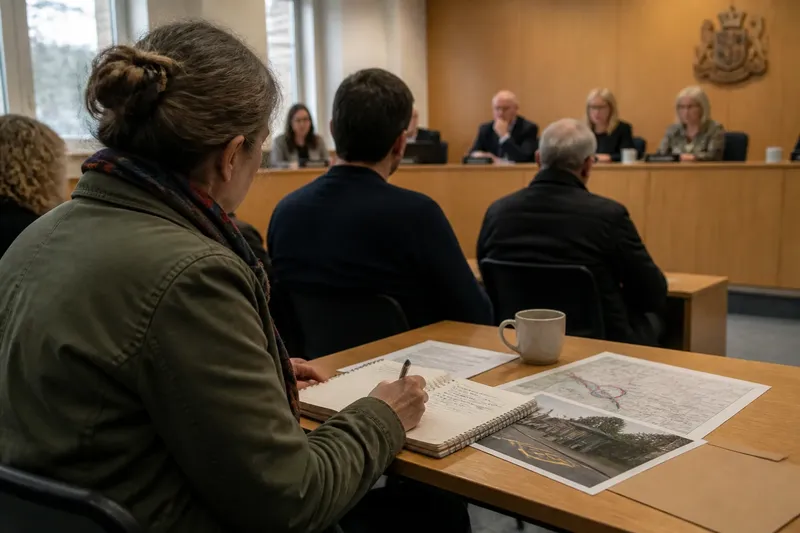
Attending a council meeting can help you hear how councillors discuss an issue, but attendance alone does not necessarily include a turn to speak. Check the agenda for public questions or comments and follow the instructions for that part of the meeting. If you want to observe, note what concerns are raised and whether the council identifies a next action.
Make a contribution that is clear and relevant
Before sending a comment or speaking, identify the part of the proposal you mean. Then state what you think should change, stay as proposed or be considered further, and why. If you have a practical alternative, describe it without assuming the council can adopt it.
Imagine a resident sees a council notice about moving a bus stop away from a community centre. The notice invites written comments by email, and the resident’s starting point is that a family member uses the centre and finds the current stop convenient. They check the proposal map, send a short email explaining the access concern, and ask the council to consider a stop nearer the entrance. The observable result is a focused submission linked to the stated proposal; whether it changes the decision remains for the council to determine.
Keep a copy of what you submit and note any acknowledgement or follow-up date in the notice. That gives you a clear record of your own contribution without implying that a response or a particular outcome will follow.
Check these details before you take part
- Requested channel: Check whether the notice names a form, email address, speaking session or attendance option; if it names a route, use it, and if it does not, ask the organiser which route is accepted.
- Closing date: Check the stated deadline; if it has not passed, submit through the specified channel, and if it has passed, ask whether any later stage still accepts input.
- Speaking arrangements: Check whether registration or advance material is required; if it is, follow those instructions, and if it is not stated, contact the organiser before relying on a speaking opportunity.
- Agenda scope: Check which proposal or item is open for comment; if your point relates to it, keep the contribution focused there, and if it concerns another matter, use the council’s relevant route instead.
- Public access: Check whether the meeting permits attendance, remote viewing or both; if one option is available to you, use it, and if neither is clear, ask how the meeting can be followed.
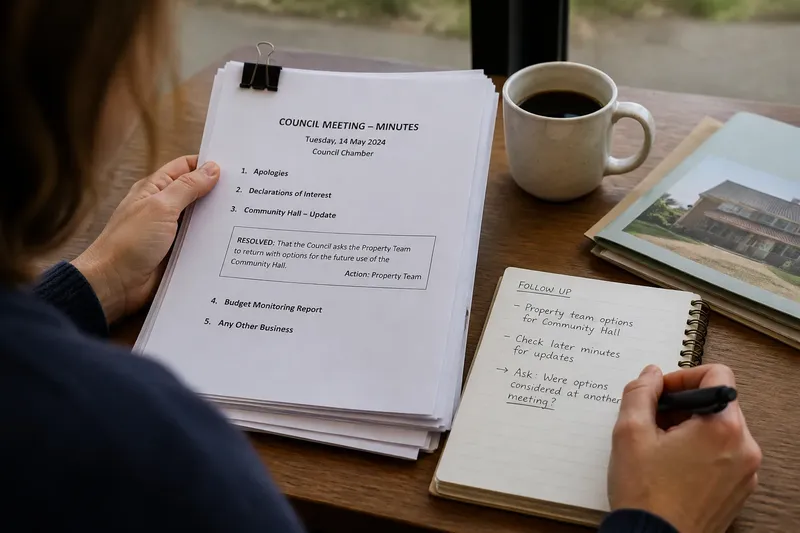
- Follow-up information: Check whether the notice explains where papers or a record will appear; if it does, use that source to follow the item, and if it does not, ask the council where updates are published.
What should you check if the instructions are unclear?
Does sending a comment mean the council must adopt it?
No. Sending a comment gives the council the contribution through the stated route, but the notice may not promise any particular effect on the decision. Read its explanation of how input will be considered, and ask the organiser if that point matters to your participation.
Can you speak simply by attending a meeting?
Not necessarily. Check the agenda and meeting instructions for a public speaking or question period, including any sign-up process. If no speaking opportunity is described, ask the council rather than assuming one will be available.
What if you missed the submission deadline?
Check whether the council has another scheduled opportunity for input or whether the item has moved to a later stage. If the notice gives no answer, contact the organiser and ask what participation, if any, remains open.
Where can you follow what happens next?
Use the council’s published agenda, meeting papers or minutes if the notice points to them. If you cannot find the item, ask the relevant council office where updates are posted.
Keep your effort aligned with the council’s process
Participation is easier to manage when you know what the council is asking for and when it is asking. For council decision participation, the practical sequence is to identify the stage, choose the stated channel, make one relevant point and keep a record of what you sent.
If the notice is vague, a short question to the organiser can prevent wasted effort. Ask which item is open for input, what form of contribution is accepted and where to follow the decision. Those answers help you take part without mistaking access to a discussion for a speaking turn, or a submitted view for a promised outcome.